The role of a designer, no matter what their chosen medium, is largely the same, and once you get passed the technical peculiarities of design for lighting, scene, and sound (and costumes I suppose, but I don't do sew so well), the process looks remarkably similar. The necessary and sufficient functions are also remarkably alike, which is very generally to make sure the cast can be seen and heard.
When design is done well, it can be so much more than that, though. A Successful collaboration between the designer, the director, and the cast (yes, even the cast) will result in a much richer physical world that will immerse audiences in the work of the cast. In the best circumstances, the designer will make the world of the play more tangeable for the cast and the director, and enhance the work that everyone is doing.
With my background in technical theatre, design was only a natural for me to pursue. The highest compliment I can be paid as a designer is when the cast thanks me for making the play more meaningful for them.
Still a minimalist at heart, I like using bright lights and dark shadows in my lighting, and subtle yet persistent themes for my sound designs. The contrasting colors, light, and dark, and the the variationsn on established themes, place the audience in the thick of the wonder, magic, turmoil, and joy of characters as they evolve over the course of a performance.
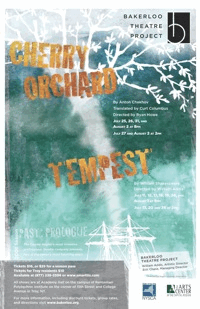
Cherry Orchard
The Tempest
To Kill a Mockingbird
Our Country's Good
The Imaginary Invalid
The Giver
The Eight
Frozen
How to Succeed in Business without Really Trying
Alice in Wonderland
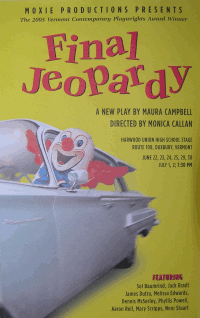
Final Jeopardy
M*A*S*H
The Diary of Anne Frank
The House of Blue Leaves
The Foreigner
Footloose and Chicago